
YOUR CART
1 Item
1 Item
Chapter 20
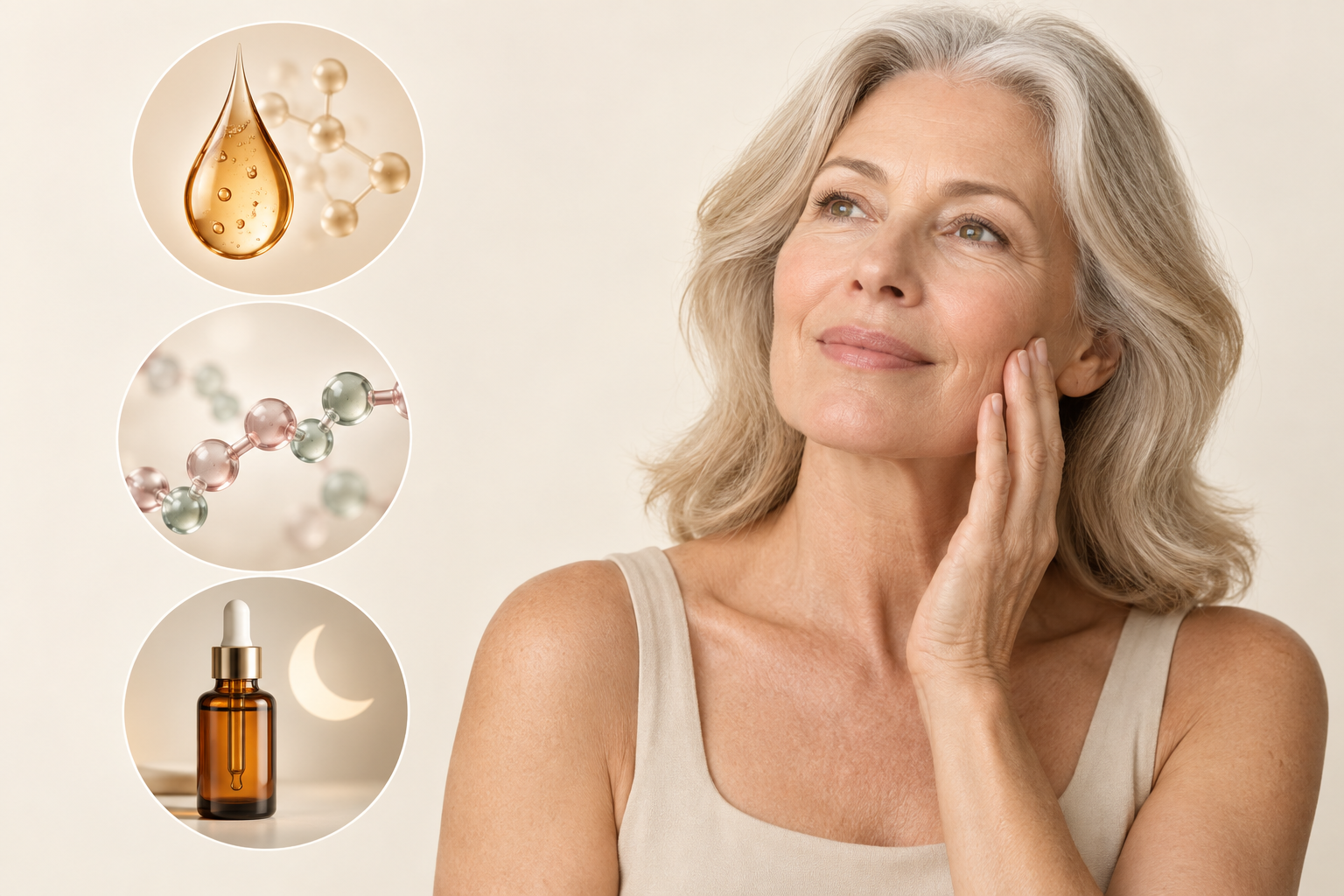
Explore antioxidants, peptides, exfoliating acids, retinoids, bakuchiol and PDRN with a clear view of their benefits and limitations.
Some active ingredients have considerably more research and practical value than others.
Antioxidants help protect the skin from oxidative stress generated by environmental factors such as UV exposure and pollution.
They can help support:
Vitamin C is one of the most researched cosmetic antioxidants.
It helps:
THD Ascorbate (Tetrahexyldecyl Ascorbate) is a stable, oil-soluble vitamin C derivative used in many advanced formulations.
A well-formulated vitamin C serum can be used in the morning alongside sunscreen. Vitamin C does not replace SPF.
Vitamin E is a fat-soluble antioxidant that helps protect skin lipids and supports the skin barrier.
It works particularly well alongside vitamin C.
Other useful antioxidant ingredients include:
Different antioxidants work through different mechanisms, which is why thoughtfully formulated antioxidant blends can be useful.
Niacinamide, or vitamin B3, is one of the most versatile ingredients in skincare.
It can help:
It is generally well tolerated and can be used with many other ingredients.
Peptides are short chains of amino acids that can act as signaling molecules in the skin.
Different peptides have different functions.
They may help support the appearance of:
Some peptides are marketed as "botulinum-like" or "Botox-like." These products should not be confused with injectable treatments. Topical peptides do not produce the same muscle-relaxing effect.
Peptides generally provide gradual benefits and are best viewed as part of a consistent long-term skincare routine.
Exfoliating acids help remove accumulated surface cells and can improve the appearance of:
| Family | What to know |
|---|---|
| AHA Alpha-Hydroxy Acids |
Lactic acid — relatively gentle and hydrating
Mandelic acid — larger molecule and often well tolerated by sensitive skin Glycolic acid — smaller molecule with stronger exfoliating activity |
| BHA Salicylic Acid |
Salicylic acid is oil-soluble and is particularly useful for:
|
| PHA Polyhydroxy Acids |
PHAs such as gluconolactone are among the gentler exfoliating acids and may be appropriate for sensitive skin. |
| Azelaic acid |
Azelaic acid is not a traditional exfoliating acid, but it provides several useful benefits. It can help improve the appearance of:
It is generally considered a relatively gentle option. |
Retinoids, including retinol and retinal, are among the most researched skincare ingredients for visible signs of aging.
They can help improve the appearance of:
Common forms include:
Menopausal skin may become:
Therefore, retinoids should be introduced carefully.
For some women with very dry or sensitive mature skin, retinoids may simply not be worth the irritation. In these cases, antioxidants, peptides, hydration, and barrier-supporting ingredients may provide a more comfortable approach.
Bakuchiol is often called a "natural retinol alternative," but it is not retinol and does not work through exactly the same mechanism.
Some research suggests that bakuchiol can improve the appearance of fine lines, uneven tone, and texture while generally being well tolerated.
It may be an appealing option for people who do not tolerate retinoids well, but it should not be presented as an identical substitute.
The strongest product is not necessarily the best product. The most useful retinoid is one that your skin can tolerate consistently.
PDRN (polydeoxyribonucleotide) has become a major trend in professional aesthetics and skincare.
It has been studied extensively in certain medical and injectable applications involving tissue repair and regeneration.
However, topical PDRN is different.
Because PDRN molecules are relatively large, there is limited evidence that topical PDRN penetrates the skin deeply enough to reproduce the effects demonstrated with injectable treatments.
A topical PDRN product may still provide benefits through hydration, conditioning, and barrier support.
The lesson is important:
An ingredient with promising evidence in one delivery system does not automatically produce the same results in another.
Do not choose a skincare product simply because an ingredient is trending.
NEXT CHAPTER
Knowing what an ingredient can do is only part of the equation. Learn how to introduce active ingredients gradually while protecting your skin barrier.